Tuesday, 22 April 2014

The Co-Op is not coping?

The Co-operative Group has published their worst ever results in their 150-year history. The company announced losses of £2.5bn, with over 80% of this deriving from their problematic banking arm, of which the group recently lost their 70% stake to US hedge funds during the Bank’s rescue. The interim Chief Executive described the year as “disastrous”. Mr Pennycook added “These results should serve as a wake-up call to anyone who doubts just how serious the challenges we face are”. He went on to say, “The scale of this disaster will rightly shock our members, our customers and our colleagues.”
In the last five years the group has been plagued with soaring costs and the next few years don’t look promising for the group either. The company does not expect to make a profit for the next two years. Moreover, Mr Pennycook has cited that he believes it will take at least a decade for the business to completely recover from their worst year ever.
Moving forward, the company has already declared its intention to cut costs by £300m, which could potentially lead to job cuts to their 100,000-employee workforce. The Co-operative Food division has plans to open 100 new small convenience stores this year as a part of their new strategy to focus on small towns and villages. Some argue this new strategy places pressing questions on their earlier £1.57bn acquisition of the Somerfield supermarket chain in March 2009. The addition of large stores to the already extensive Co-op’s estate portfolio, which currently consists of 650 unproductive properties of which 33% are vacant, will put the CEO under further scrutiny. Recently, the UK’s fifth-largest food retailer (6.1% market share) has suffered from falling sales and underlying profits due to the cost of store closures along with price reductions.
Last month, a £400m black hole was discovered putting the bank in a dilemma in regards to whether new shares should be issued to fill this sizable gap. Ultimately, this would mean the Co-op Group would have to raise £120m if it is to retain their 30% shareholding in the Bank. Black holes within the balance sheets seem to be a common occurrence in the Co-op’s Bank. Previous to this, a £1.5bn black hole was discovered in April 2013, shortly after the Bank unsuccessfully attempted to purchase 632 Lloyds Bank branches.
The co-operative movement was set up in Rochdale, in the North of England, where their members consisting of small retailers, wanted to combine their purchasing power. Today, the Co-operative Group remains a “mutual” business, owned by its customers and 8 million members and is the biggest of its kind in the UK. During the last century, the Co-operative Group has diversified into different lines of businesses. It now owns the third-largest chain of Pharmacies, where profits have increased by £5m despite falling sales. The Co-operative Group also own a successful funeral provider, the nation’s biggest, where both sales and profits are increasing.
Critics frequently highlight the complexity of the Co-op’s corporate structure that makes it ungovernable; former Chief Executive, Euan Sutherland, has reiterated this view. Furthermore, Lord Myners stated that the group spent too much time focusing on acquisition deals that proved “breathtakingly value-destructive” and as a result the Co-op has amassed a great deal of unsustainable debt. The future of the Co-operative group is uncertain, however it is more than clear that the company has to make structural changes if it is to continue to exist. However, this revision will prove a substantial task considering the group has almost 300 subsidiaries and a more than complex structure.

By Richmond Amoah

Sunday, 23 February 2014

What’s up with WhatsApp?

This week Facebook bought WhatsApp, the instant messaging mobile application for a staggering $19 Billion dollars (approximately £11.42 Billion). Given the firm was only founded five years ago, this is considered quite a high price and adds to the growing scepticism surrounding the technology industry of over-valued companies, similar to that occurring before the dot-com crash of 2000.

On the otherhand WhatsApp’s valuation can be justified by the fact that it is the world’s fastest growing social network, as 1 million new users join the network’s existing 450 million user base every single day, dwarfing that of Facebook at its peak. In addition it’s at the forefront of smartphone-based messaging mobile apps that is sweeping the world. The others within this small group are mostly regional competitors. These include the Japan’s Line that boasts 340 million users and China’s WeChat with 272 million active users. These start-ups took full advantage of the popularity of data plans that emerged due to the success of smart phones in 2008.

So what exactly is WhatsApp?
It’s an application available on all the major mobile-phone platforms such as Apple and Android, that allows users to send unlimited text, audio, video and picture messages to other users around the world over the internet, without incurring expensive carrier charges. Essentially WhatsApp replaces traditional text messaging and users of the service need no login with the only requirement being a phone number. To date, WhatsApp has never engaged in any advertising campaigns, relying solely on word of mouth for user growth. Currently WhatsApp main income source is subscription fees, which it annually charges to users at £0.69 after a year-long free service. The application’s unique selling point is that it offers the ability to engage in-group conversations and is deemed as a lot more hassle-free than their Facebook or Twitter alternatives. The founder, Yan Koum has avoided the introduction of advertising onto the platform, as he believes it will curb users away. However some users are doubtful whether or not this approach will continue due to Facebook’s increasing reliance on advertising from their core elements. On the other hand, one of the services’ disadvantages is that you need the Internet to use it, unlike text messages that rely entirely on carriers. However this is not too problematic, for users in developed nations, as most people there, live and work within urban areas with strong signals, with most in 3G and 4G enabled areas.

Facebook
Recently, Facebook reportedly attempted to acquire Snapchat, in November of last year for a $3 Billion cash offer, even though the firm continuously made losses. This successful deal on the other and, represents Facebook’s biggest acquisition to date and the highest start up buyout in history. Surprisingly the takeover deal was only initiated 11 days before the announcement and was completed on Valentines Day with the assistance of Morgan Stanley and Allen and Co. Initially the market reacted negatively, as following the deal Facebook shares fell by 5%, before quickly recovering slightly. The £11.4 billion deal was represents approximately 10% of Facebook market capitalization and comprises of £2.4Billion in cash, £7.18 billion in Facebook shares and £1.8 billion in restricted stock to WhatsApp employees, an incentive for them to stay with the firm.  Facebooks founder, Mark Zuckerberg said “I’ve also known Jan for a long time, and I know that we both share the vision of making the world more open and connected.”

Why pay so much?
In acquiring the messaging service, Facebook will get access to WhatsApp young, teenage audience, which it has been losing, according to Pew Research Centre. The paper concluded Teenagers have been maintaining lower profiles on Facebook and instead are spending more of their time on WhatsApp and Snapchat. This buyout may help Facebook regain their original target audience back to their social network of 757 million active daily users
What’s next?
However WhatsApp users will look elsewhere if Facebook ownership means messaging services continue to stop working, which occurred on 22 February for 3 hours, only 3 days after the announcement.  In the meantime, Jan Koum will be joining Facebook’s board after a job rejection from Facebook only a few years ago. "We're excited and honoured to partner with Mark and Facebook as we continue to bring our product to more people around the world." Koum has insisted that WhatsApp will remain in their Mountain View Headquarters in California and will remain independent from Facebook’s existing messaging service.
Only time will tell, whether Facebook’s huge investment in WhatsApp will actually pay off, as WhatsApp’s hostility towards advertising, dramatically reduces the firm’s potential income streams. However one thing for certain, is WhatsApp incredible growth potential, at current projections it will reach the 1 billion user landmark by 2016.

By Richmond Amoah

Monday, 25 November 2013

Facebook attempts to bite into Snapchat

Snapchat’s 23-year-old CEO, Evan Spiegel, has reportedly declined a £1.84bn cashoffer from Facebook. Snapchat is a photo messaging application whose main demographicis between the ages of 13 and 23. Despite having been downloaded by 9% of US mobile phoneusers and handling 400 million messages everyday, Snapchat has as of yet failed to generate any revenue. Although, Twitter has managed to receive a valuation of £20bn when it floated on November 7th, despite never generating a profit. Only 5 months ago, when Snapchat received a second series of investments, it was valued at £500m.


The Snapchat team urgently needs to find revenue sources. They cannot continue making losses in the long term. Like other similar appcompanies, they could thrive through the use ofadvertisements, however this will most probably cause users to move elsewhere, which is a big issue, because Snapchat is technically easily replicable. It could probably take a couple ofprogrammers a month to come up with an almost identical service. Alternatively Snapchat could sell virtual goods, like some of the online game companies, however this is unlikely to justify Snapchat’s £1.8bn valuation. Unfortunately for Snapchat, their whole model is around the fact that data is never stored. This is set to hinder Snapchat’s success because it means that there is nothing to encourage users the more they use it.Hypothetically, Snapchat users can delete their account and still have their network, as the application relies solely on the user’s address book. If Snapchat cannot keep their users, theywill fail to ‘monetize’ them.

These factors has led me to question Facebook’s strong interest in the two year old company, which would have been their biggest acquisition to date. Facebook has already acquired Instagram, another media sharing application and is planning to introduce a private messaging service within it. This will directly compete with Snapchat in an effort to lure users. On the other hand, Facebook’s bid is understandable to some extent, due to Snapchat’s growing dominance in the picture-sharing market. Snapchat now shares 14% more photos than Facebook. Facebook is simply trying to eliminate the threat of a futurecompetitor. I believe Facebook is willing to pay as much as they need to in order to ensure their longevity and success. But I think Facebook should remain competitive with innovation, not with acquisition. However, no one wants to become the next MySpace.


Burton Biscuit Company

If you love eating biscuits, you must have, at some point, come across Jammie Dodgers and Maryland Cookies. Besides their delicious taste,another similarity between the two brands istheir owners, Burton’s Biscuit Company. Ontario Teachers’ Pension Plan has recently acquired the UK’s number two biscuit maker for an estimated £350m. However, the managerial team has managed to negotiate themselves a small stake in the business, which hasn’t been performing terribly well of late.  Last year, sales dropped by £8m to £333m. This isn’t the first time; Canada's biggest single-profession pension fund has struck in the UK, with their stakes here currently valued at £4.3bn. This represents nearly 6% of theirtotal net assets of £77bn. In fact, just four weeks ago, the fund also purchased the Busy Bees nursery chain. These two companies will now belong to the Fund’s UK rooster, which alsoincludes the likes of Birmingham Airport and Camelot, best known for operating the National Lottery. 

Tuesday, 2 July 2013

Can the new Bank of England King get the Economy back to its old prosperous ways?

Yesterday 65 year old Mervyn Alister King made way for the new Canadian Governor of the Bank of England, 48 year old Mark Carney. Carney comes into power at a difficult economic time when the UK has struggled to experience significant growth despite numerous efforts. Carney also has big boots to fill after the relatively successful tenure of his predecessor who was governor for 10 years and his monetary policies helped the UK to have positive GDP growth for a long period. However most recently King has been unsuccessful in tackling the economy after the global meltdown in 2007, as after placing in historically low interest rates, growth has failed to pick up.

The Bank of England is no ordinary bank. It is not like a high street bank. So you may be wondering what the Bank of England actually does?

1) The Monetary Policy Committee at the Bank of England (consisting of Governor) meets every month and its main task, set by the government, is to keep inflation at 2%
2) It is looking at what it expects inflation to be in about two years' time, as it assumes changes in rates will take that long to work
3) It sets Bank rate, which is the percentage it charges on loans it makes to banks and other financial institutions. That influences what the banks and building societies charge for loans and mortgages and the returns they pay to savers
4) It acts as the banker for the government. The government needs a bank just as we do.
5) It designs and issues banknotes.
6) It replaces notes that are old

Why are interest rates important?

(To households)
If interest rates are too high, the incentive to save will be high as there will be higher returns on savings. So instead of spending in the firms, households will decide to save instead so there is less consumption. This will cause a fall in business confidence and so less investment and less jobs.

On the otherhand if interest rates are too low then the incentive to save won't be high enough so everyone will spend as returns to savings won't be high enough. Then there will be too much money chasing not enough goods causing the "deathly"inflation

(To Firms)
To encourage growth in the economy Sir Mervyn King dropped interest rates, this reduces the cost of borrowing so this means production costs become lower for firms who take out new Loans and have existing loans . As a result profit expectations become higher, so firms are more willing to invest as there is higher returns for shareholders. This means more jobs and higher GDP. But because business confidence was so low, firms didn't really care about these changes so no growth occurred unfortunately.

Recent interest rate trends

1) January 2003 - January 2008
Fluctuated between 3.5% - 5.7%

2) January 08 - January 2009
Dropped dramtically fallen from 5.5 % to 0.5%

3) March 2009 to January 2013
Interest rates have remained at 0.5%


Mark Carney Profile
Age: 48
Hometown: Fort Smith, Canada
Appointed by: George Osborne, Chancellor of the Exchequer (Tories)
Osborne Description: "outstanding central banker of his generation"
Salary : £620 000 (20% more than King)
Contract Length: 5 years (Normally 8 years)
Previous Employment: Governor of Canada central back
Top banker in Goldman Sachs for 13 years (where he already worked in London)
Education: Went to Oxbridge and Harvard just like King and the 3 other previous governors
Why he's so liked? : With his help, Canada didn't suffer severely like other western countries during recession

Mark Carney is clearly a distinguished banker but just because he's been effective in helping the Canadian Economy, this does not been he'll be able to help us out of Economic mess after all, the UK's GDP is almost twice of Canada's and interest rate mechanisms have significantly different effects due to varying levels of home ownership which makes up a large proportion of UK household expenditure. Whether Carney is successful depends on many factors, but whatever happens, EconomicsMate will keep you updated.

Tuesday, 26 February 2013

Absence

Sorry guys I haven't been able to post any articles, I've been ill. As soon as I get better, I promise to upload as many as I can!!

Tuesday, 12 February 2013

You need to GET SET APPLY

I just finished having a wonderful conversation with Gerard Gregg-Smith,
the managing director of GCS associates who was pupil at my current school (Christ's Hospital).

He told me about a fantastic website: getsetapply.com

I wished I had found this website earlier as it would've helped me a lot when making the difficult decision of university courses.

If your looking to apply to Uni later on this year or know anyone that's about to, point them to this helpful shortcut.

Sunday, 20 January 2013

Blockbusters goes bust


Like many people I have great childhood memories when I’d borrow games and DVD’s from this legendary store every Friday night. In those days, there was no Love Film and Netflix, so there were no alternatives to having high quality media at cheap, affordable rates. When I heard the news that Blockbusters was closing it really hit home that the physical retail sector was dying and was rapidly being replaced by a new virtual market online.
For those who don’t know Blockbusters is an international provider of movie and video game services with 60.000 employees worldwide, many of them operating in the 1000 store strong American subsidy of the firm. They first opened their doors in the United Kingdom in 1989, after being successfully received by Americans since its launch in the USA four years earlier in 1985. Blockbusters were a very successful business before the emergence of internet competitors such as LoveFilm, now owed by the Internet giant Amazon.co.uk. Also due to the popularity of DVD piracy, the demand for DVD’s is very low, even though some of the most commercially successful firms of all time have occurred in the last decade (Slumdog Millionaire, Avatar, etc). Many people can now watch nearly any widely known film online almost instantly by typing the phrase “Watch (movie name) free online” for free and without leaving their home. Due to this and probably mismanagement too, Blockbusters UK was taken into administration on Wednesday 16th of January 2013 by Deloitte, a member of the big four audit firms. The firm has shed around 100 stores in the last few years and is set to do so to 160 more of their stores. Its highly likely that 760 people will face redundancies and will be added to the UK’s staggeringly high unemployment pile and unfortunately it is also likely that another 4000 people could risk unemployment if the administrators fail to find a buyer.
Deloitte has said “Having reviewed the portfolio with management, the store closure plan is an inevitable consequence of having to restructure the company to a profitable core which is capable of being sold.
Blockbusters aren’t the only retailer to be hit by the Internet powershouses, HMV and Jessop’s have also gone into administration. It could be argued that the demand for Camera’s has decreased as these are now incorporated at a high standard into mobile phones, however I'm pretty sure that more people than ever before listen to music, so  ITunes and Amazon MP3 must be the cause for HMV's downfall.
Recently its come to light that Apple, the ITunes Owner only paid 2% in Corporation tax outside the US, which is advantageous in a competitive sense as it means they can afford to reduce prices whilst retaining their profit margins whilst firms like Blockbusters who actually pay the required amount are penalised for doing so. I think tax avoidance is a major issue in the UK, maybe the coalition government wouldn’t have to make as much of their lethal “necessary cuts” if they stopped these multi-national firms stealing openly from Britain’s purse.

Wednesday, 9 January 2013

Does Reducing Interest Rates always stimulate short term Economic Growth?


Consumption and investment are both major components of Aggregate Demand accounting for almost 80% Aggregate Demand. An important determinant of the AD components value is interest rates which is controlled by the Independent Bank of England using monetary tools. Low interest rates encourage consumers to borrow money from banks due the cheaper cost of repayment, this extra money makes consumers feel wealthier (wealth effect) therefore they’ll be willing to buy more goods from the Market. This causes the AD curve to shift to the right where there is a higher price level, inflation.


Similarly a reduction in interest rates will encourage firms to take out loans, as again the repayment cost will be lower. IN addition lowering interest rates will reduce the incentive of firms to keep money in Banks as the rate of returns will be lower. This money is invested in capital and training of existing and new staff so inefficiency can be decreases. This is shown on the graph below. The productive potential of the economy moves from Point A to Point B, which is closer to the PPF, where ideally where firms and the Country should be operating at.

Cheaper loans are ideal for business confidence s they reduce total cost which is very important for the profit maximising firms which exist in the Capitalist world. This is because cheaper cost will raise the profitability profile of potential business opportunities (Profit= Revenue - Total Cost). This surge of new investments will shift the AD curve to the right, also because of the multiplier effect the curve will shift even further than anticipated. (Multiplier Effect – Initial change in AD causes a greater final impact on the level of national income).

However surely it’s idiotic to believe that a simple change in interest rates will always stimulate short run Economic growth. This has been demonstrated quite well in our economy, the Bank of England committee set interest rates to record low figures. But despite this there wasn't much economic growth and this premature reduction prevented further reduction in the future that could've actually resulted in growth.

Another reason why I fail to agree is because if the interest rate is reduced dramatically consumers won’t be able to respond if they aren't made aware (Information failure) n. Also consumers and firms won’t respond to the reduction tot the reduction if it’s not significant enough and the interest rate is still relatively high. For example if it was cut by only 0.1% to 4.75%, this may not be enough of an incentive for firms and households to take risks on their future capability to pay it back. Also the interest rates set by the Bank of England for high street banks who might decide not to pass these savings onto potential customers to increase their profit margins for its shareholders.

In addition, a fall in interest rates may not always result in short run economic growth of other AD components change. For Example consumption and investment may increase, but this might be countered by a dramatic fall in net exports, which could happen if the newly acquired loans are used to purchase import goods. This will reduce the x-m figure and cause the AD curve to shift to the left if the change is significant enough. This will actually result in a short run decline, not the intended growth.

There are circumstances in which a drop in interest t=rates will result in growth but id largely depends on the position i which the economy is operating on the AD/AS curve. In this example growth has occurred (Y1 to Y2) as the economy isn’t at its optimum, so the price isn’t at its optimum so the price level P1 remains relatively constant, with no inflation occurring. However if the AD curve was originally at AD3, then an increase to AD4 will produce virtually no economic growth but will cause inflation, as the price level rises from p2 to p3.

A fall in interest rates may cause business confidence to increase as profit expectations will be higher. Due to this more investments will occur which will stimulate growth by raising national output and decreasing unemployment. This is most likely to occur if it happens in conjunction with improved tax policies (from firm perspective) and less government market intervention which can result in Government failure. One example of this is the excessive health and safety rules.

In conclusion i strongly believe that reducing interest rates won’t always result in a rise in economic growth due to the complexity of the economy. Therefore it’s wrong to be absolutely certain about economic policies because of this.

Monday, 26 November 2012

Could this be another present-less Christmas for retail firms?


Coca - Cola’s classic Christmas advert always reminds me that the festive season is fast approaching, its less than 2 months away. Christmas is a very important time young children along with retail based firms as they over 40% of their annual profits in the 3 month period before and after the 25th December. Many people are optimistic that the increased spending and festive cheer would be the perfect remedy to get the sick UK economy back into action. The chief executive of Next, Lord Wolfson said "I suspect it [Christmas] will be much the same as the rest of the year. I cannot see why the consumer economy should be any different.” Like Lord Wolfson I am sceptical of Christmas’ possible effects on the UK economy as this year is a very unusual one, therefore shouldn't be compared directly with the winter success in previous years.

A research from Ebay has showed that the UK is losing up to £120 million in mobile phone revenue due to the lack of Universal 4g services. Money is being lost as many more consumers are using the web to shop for Christmas gifts via Amazon and Play.com, it is expected that 55% of consumers will use their mobile phones to buy much needed gifts for their love ones. However these consumers are currently being restricted by slow connection speeds. The main barriers are network reliability and payments timing out, the 4g coverage is built specifically to process internet more efficiently and quickly. Even though the UK acted very fasted to capitalise on 3g coverage, it has been slow to answer the calls of consumers demanding the more superior 4g coverage, which is expected to become widespread next year autumn, despite the fact that forty countries such as India and the USA are already benefiting from the new technology already. Clare Gilmartin, the vice president of eBay said “Mobile devices have become virtual stores in our pockets, giving us the ability to shop anytime, anywhere. But for consumers, it’s critical that the experience is quick, seamless and simple. While we welcomed the move by Ofcom to bring the 4G spectrum auction forward to early 2013 there’s no doubt, as this research shows that for the UK economy the cost of another Christmas without universal 4G is huge.”

In other news, a credible think tank has said that the Chancellor of the Exchequer may have to reduce public spending up untill 2018, when the new second form will eventually be leaving CH. The Institute for Fiscal Studies suggests that George Osborne has to make an extra £11 billion in spending, if he wants to continue reduced the UK’s £1 trillion deficit.  A Treasury spokesperson said: "Action taken by the government has cut the deficit by a quarter, whilst over a million new jobs have been created in the private sector, inflation is down, and the economy is healing. Britain still faces economic challenges at home and abroad but the government is taking the tough decisions needed to deal with our debts and equip our economy for the global race.

Despite having the highest consumer confidence in 15 months, sales have been slowly decreasing. The UK retail sector was one of the most effected after the 2007 crash, as consumers are unwilling to spend too much due to job uncertainty caused by the recent alarming unemployment figures of 2.5 million. Henry Enos, a consumer  expert said ”Retailers will continue to face the challenges of changing shopping habits brought about by the economic climate, but also increasing use of the internet as both a shopping and price comparison resource. The consumer is more educated due to the media society we live in”.
We’re coming to our sixth competitive Christmas is an economic downturn but this time the UK has been battling against the heavy Government cuts and high unemployment. I don’t think retail firms should expect huge demand for their products. Only time will tell, if Santa Claus can drag us of out of our deep hole along with our European neighbours.


Coca-Cola Christmas advert: http://www.youtube.com/watch?v=ogetBqMgau0

Is the UK Transport System good enough?


The transport industry is very important to the UK Economy. We need Transport to move goods and services from Firms to customers and employees have to use transport to get to work quickly. If the transport system was non-existent it would be virtually impossible to move things around the country, which would cause high unaffordable prices. Also being an island, means the UK wouldn't be able to participate in lucrative international trade. It is quite disappointing that many transport projects are being postponed by the Government, at a crucial time when vital improvements to the transport System is needed. It’s obvious that our potential economic growth is being jeopardised by the Government’s reluctance to spend, by investing into the county.

I have recently learned that of out of thirteen important, possible UK transport projects potentially less than half will actually go ahead. One of the unfunded projects includes the controversial third runway at Heathrow, which I think the Transport Minister Norman Baker, should really urge the Government to consider, as the airports expansion is imperative to meeting the ever increasing future air travel forecast. Currently Heathrow’s lack of capacity is costing the UK economy £14 Billion in lost trade every single year. It’s important that the UK’s busiest and arguably most important airport can reach a new higher capacity, which will attract investment by airlines, providing jobs for some of the 2.5 million unemployed people in the country. Norman Baker said "Making sure that the country has the transport network it needs to deliver economic growth is a top priority for us". These cutbacks contradict the Transport Minister’s plans, however in saying that, he has successfully secured funding for the high speed 2 rail routes between the UK’s major cities, London, Birmingham and Manchester.

The British chambers of commerce said “While the government has taken important steps to boost infrastructure funding and delivery since the first budget, the updated assessment shows that too many transport projects, which are crucial to business growth, are stuck in the slow lane. We need bold action from the government to improve the UK's transport infrastructure". The BCC director said "This kind of investment is insulated from global uncertainty, and it creates short-term confidence, jobs in the medium term, and improves the UK's competitiveness in the long term".

The Government really has to sought its act out and be decisive especially with the third runway at Heathrow, if it really wants to see the UK economy recover.

Wednesday, 7 November 2012

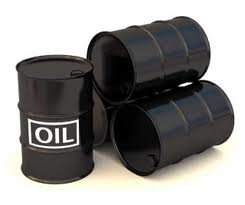
UPDATED Can anyone become Oil rich?


Oil is a chemical liquid made after millions of years of seabed compression, comprising of dead “things” such as Fish and Plants. Due to Oil's high carbon content, it’s a widely used as a fuel, or in the lubricant industry. Not surprisingly, there is a very large demand for this limited good, so many countries, particularly those in the Middle East have taken advantage of this and have become "Oil Rich" in the process. However many other Oil resourceful countries have unsuccessfully attempted to mimic this success.

"Dubai's Economy was built on the back of the oil industry" (Business Week). Currently Oil production accounts for 6% of its total exports. This is a decrease from previous years since Dubai has diversified into exporting other goods and banking services, by using income from oil to make good investments. On average it produces over 40 barrels a minute and could theoretically be doing this for the next 93 years as it has one of the largest Oil reserves on the world.  Partly due to Dubai's small population, their newly acquired new wealth has been shared amongst citizens, although not equally. Famously, Citizens in Dubai don't have to pay any income Tax, which puts more money in their pockets.

On the other hand  Angola has also discovered large oil reserves on its shores, which is the 18th biggest oil reserve in the world. Currently Angola is the 17th biggest Oil exporter in the world; however their position is under threat by other African countries such as Ghana which has recently started exporting the commodity too. Angola is a large south African country, more than five times the size of the UK. Currently, around 80% of the country’s revenue is made from the sale of Oil, which clearly shows the country’s large dependence on this sole good, even though Angola has Diamonds and Gold too.  Although it’s a major exporter of Oil, the generated revenue has been mostly misspent or stolen by Angola’s notorious, corrupt politicians. Angola’s GDP has increased by 400% since 2004 and is increasing annually by 20%. But this was probably due the political instability from the civil beforehand which meant that exporting (selling to other countries) goods became very hard and dangerous. Even though the country’s economy is growing, 70% of the citizens still live on less than £1.30 a day and Angola is widely regarded as the least developed country in the Africa. Africa’s most populous country, Nigeria, which has the 10th biggest oil reserve in the world, is in a similar position to Angola’s. 40% of Nigeria's GDP is from its Oil industry and its accounts for 80% of the Government spending. Like Angolan politicians, Nigerian politicians have been known to misspend oil revenues ever Since its oil boom in the 1960’s. So the vast oil wealth Nigeria has created hasn't benefited everyone, especially those poorest people in the country.

The general conception is that Oil entitles instant economic growth. But it doesn't. It relies mainly on transparent and efficient management from politicians. So not everyone can become “Oil rich”.


Tuesday, 6 November 2012

Can anyone become "oil rich"?

Oil is a chemical liquid made after millions of years seabed compression, comprising of dead matter such as Fish and Plants. Due to carbon's high carbon content, Oil is a widely used fuel. For example in the electricity, cosmetic and Lubricant industry. Not surprisingly, there is a very large demand for this finite good, so many countries, particularly in the Middle East have taken advantage of this and have become "Oil Rich" in the process. However many other Oil resourceful countries have unsuccessfully attempted to mimicking this success.

"Dubai's Economy was built on the back of the oil industry" (Business Week). Currently Oil productions accounts for 6% of its total exports. This is a decrease from previous years since Dubai has diversified into exporting other goods and banking services, by using income from oil to make investments. On average it's produces over 40 barrels a minute and could theoretically be doing this for the next 93 years as it has one of the largest Oil reserves on the world.  Partly due to Dubai's small population, their new wealth has been shared amongst citizens although not equally. Famously now Citizens don't have to pay Tax, which puts more money in pockets.

On the otherhand, Nigeria has also discovered large oil reserves on its shores, which is the 10th biggest oil reserve in the world. Subsequently 40% of Nigeria's GDP is from its Oil industry and its accounts for 80% of the governments spending. Nigeria is a large African state with a population of over 120 million,  its the 7th most populated country. Although its a major exporter much of the Oil revenue has been misspent or stolen by Nigeria's notorious politicians, so many of the country's poor inhabitants have been able to benefit from the GDP surge.


Just because you have Oil, it doesn't mean you instantly become rich. It relies mainly on transparent and efficient management from politicians.

Sunday, 4 November 2012

When China met Africa


Last week Wednesday, 31st October I attended a lecture at the London School of Economics  named "When China Met Africa". The title was far too vague considering the that the film that was shown during the Lecture was entirely focused on Zambia, a small South African country with a population of 13 million people, just over 1% of China's 1.3 Billion population. The film/Documentary was made by brothers Nick and Mark Francis and it showed the political relationship between Zambia ad China by shadowing Felix Mutati, Minister for Trade and Commerce in Zambia. Whilst following the lives of Chinese farmers/Investors in Zambia and there frequent squirrels with there local workers.


These are some of the key points I gained from the film, with sprinkle of my opinions:

China win many African contracts for Roads and other Infrastructure 
Chinese in building the Tutse Road in Zambia. Skilled Chinese workers have to be brought to Zambia in for it a very costly procedure for a small project. This should've been an opportunity for the Chinese to share their construction knowledge with locals so they to can become skilled workers too.

Chinese woman owning farm in Zambia - Private Foreign a investment 
This means that much of Profits generated using Zambian resources are transferred abroad and don't actually stay in the country where I think it ought to. This occurs a lot in the Uk, where immigrant workers send much of the money they earn back home and not domestically. This reduces the multiplier effect as the leakages have increased, so there is less consumption at each successive round. This is particularly important in Zambia and other developing countries which needs as much consumption as possible to drive investment and growth.

"Need roads to become rich, like blood in the body" 
This was a quote I picked up from a Chinese manager responsible for building the Tutse road. I agree with this very much,  all the top economies have great transport infrastructures. As part of my A2 course I'm studying transport economics and it was after my first class that I realised how important transport really is, not only economically but socially too. We wouldn't be able to get anything or go anywhere. It really is a necessity.

During the film i noticed that the Language barrier problem was very apparent, many Chinese workers found it extremely hard to communicate with Zambian workers. This is very inefficient as its time consuming and therefore expensive. It's made even more expensive by the fact translators are needed frequently. Due to negative press about education in Africa, I wasn't surprised that hardly any locals spoke Chinese. Zambia has been trading with China for nearly half a century since it gained independence from the United Kingdom in 1964. Surely politicians should've realised that it would be wise to invest in labour by teaching them such languages, it would've made the country a much more desirable place for Chinese investors,. There are plenty of other African countries that are eager for foreign investment, China is set to become the biggest economy in a matter of years.

Many Zambian drivers don't have official licence, so it makes their employability for transport-related jobs very hard. So in order to get a job of the kind, employers have to test drivers, which can sometimes result in capital such as expensive imported trucks breaking if the supposed drivers aren't actually drivers. How else can employers find drivers? Also many of the workyers feel mistrusted as they are "never left alone" with Chinese equipment, causing resentment between Chinese workers and Zambian workers. On the 5th of March a Chinese miner was killed by a Zambian mob protesting for better pay. 

China is a important foreign investment, not only in Africa but worldwide.
Some Chinese put money in banks overseas as they think the country is politically unstable.

This week I'll be posting another articles relating to this one called "what does China really want with Africa". SOOO WATCH OUT FOR IT!!!!